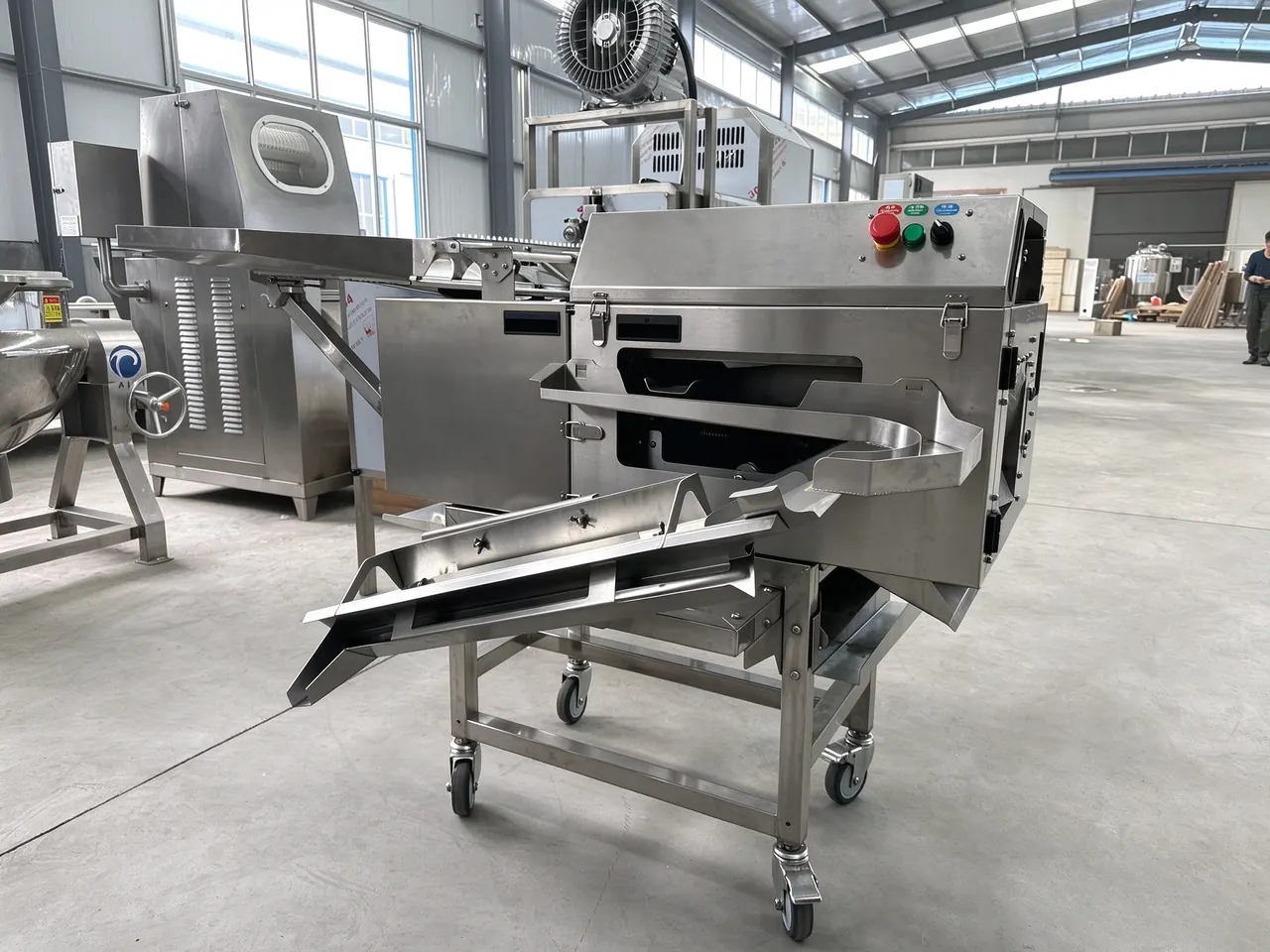
Chain-Type Egg Breaking Machine
This machine cracks shell eggs, separates the contents and filters the liquid before it leaves.
Also called egg breakers or egg cracking machines.
An egg breaking machine turns shell eggs into liquid product. That sounds simple, and mechanically it is — but three things decide whether a breaking line is worth running: how much liquid you recover from each egg, how much shell ends up in that liquid, and how quickly one bad egg contaminates the batch behind it.
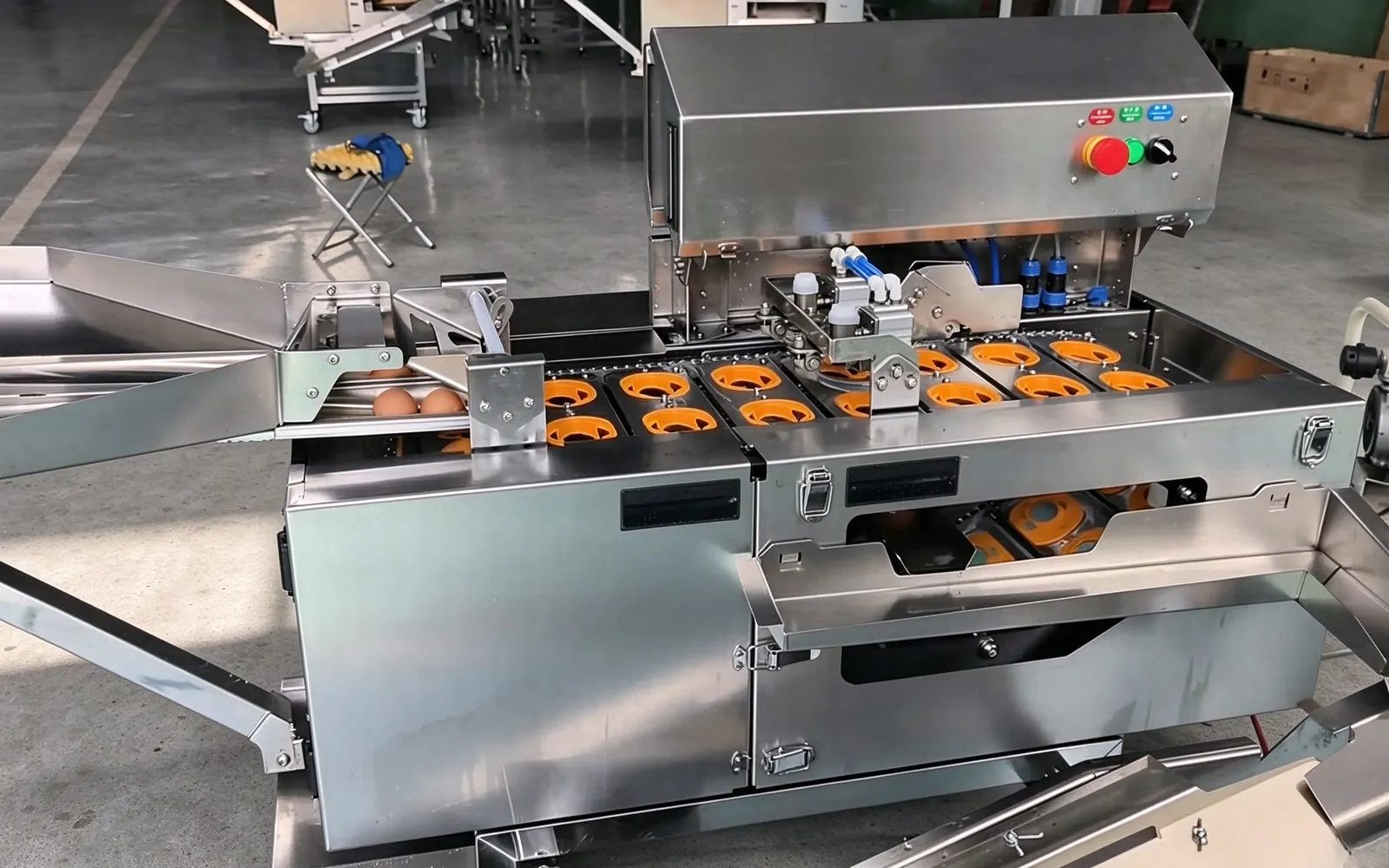
Machines are usually compared on eggs per hour. In practice, yield and contamination control determine the economics. A machine running 16,000 eggs per hour that loses two percent more yolk than another is losing money every shift, regardless of its rating.
We build chain-type breaking machines from 5,400 to 16,000 eggs per hour, sized against your egg supply, your product mix and what happens downstream.
This machine cracks shell eggs, separates the contents and filters the liquid before it leaves.
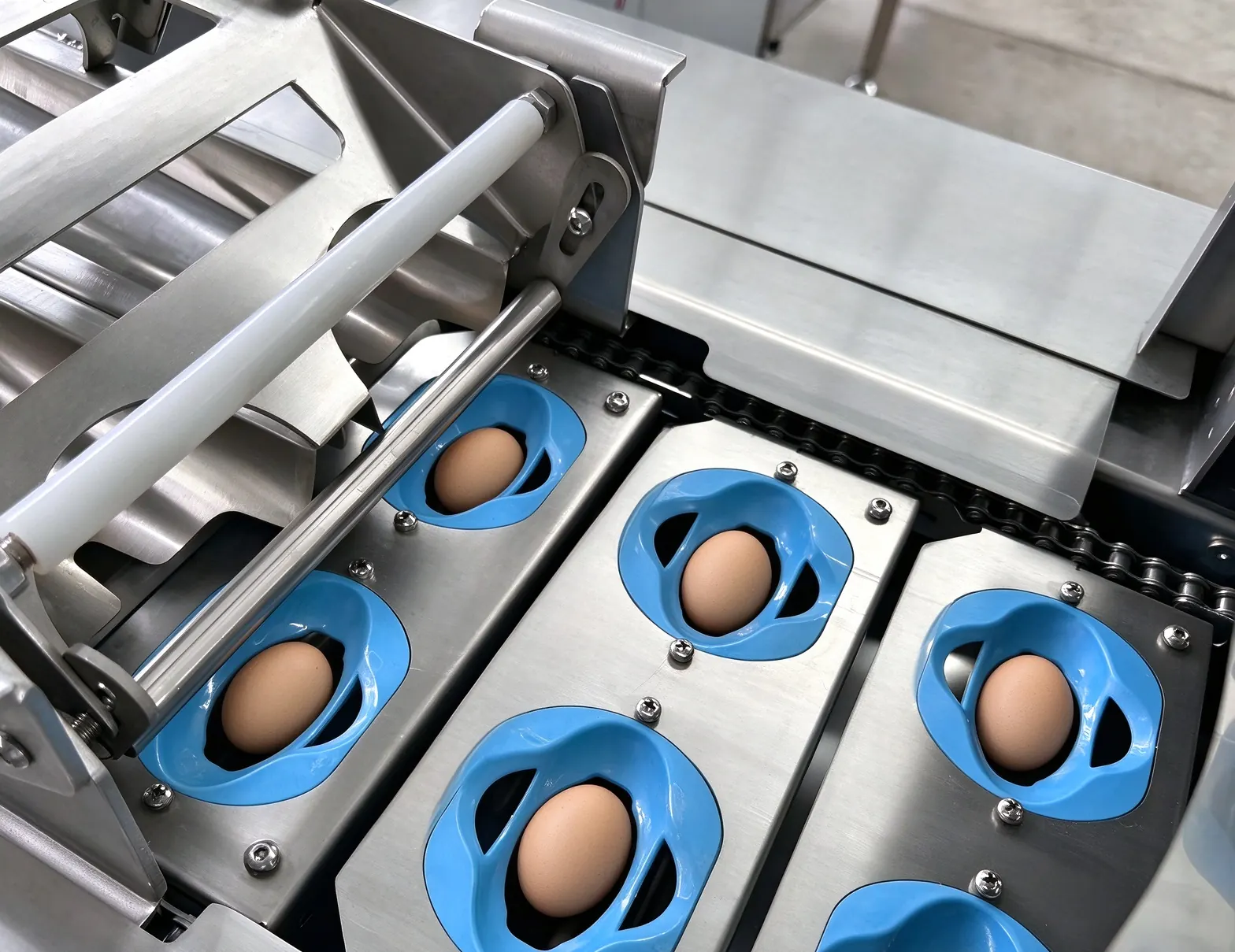
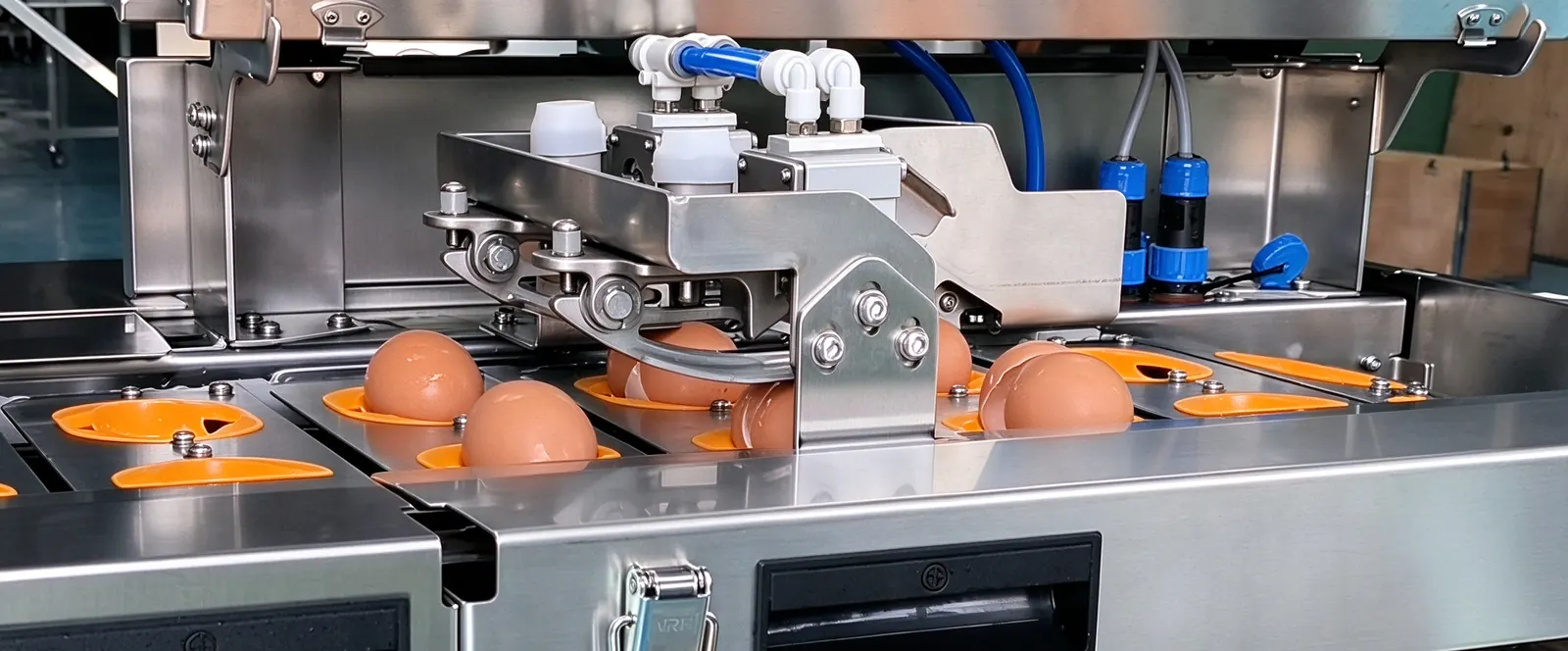
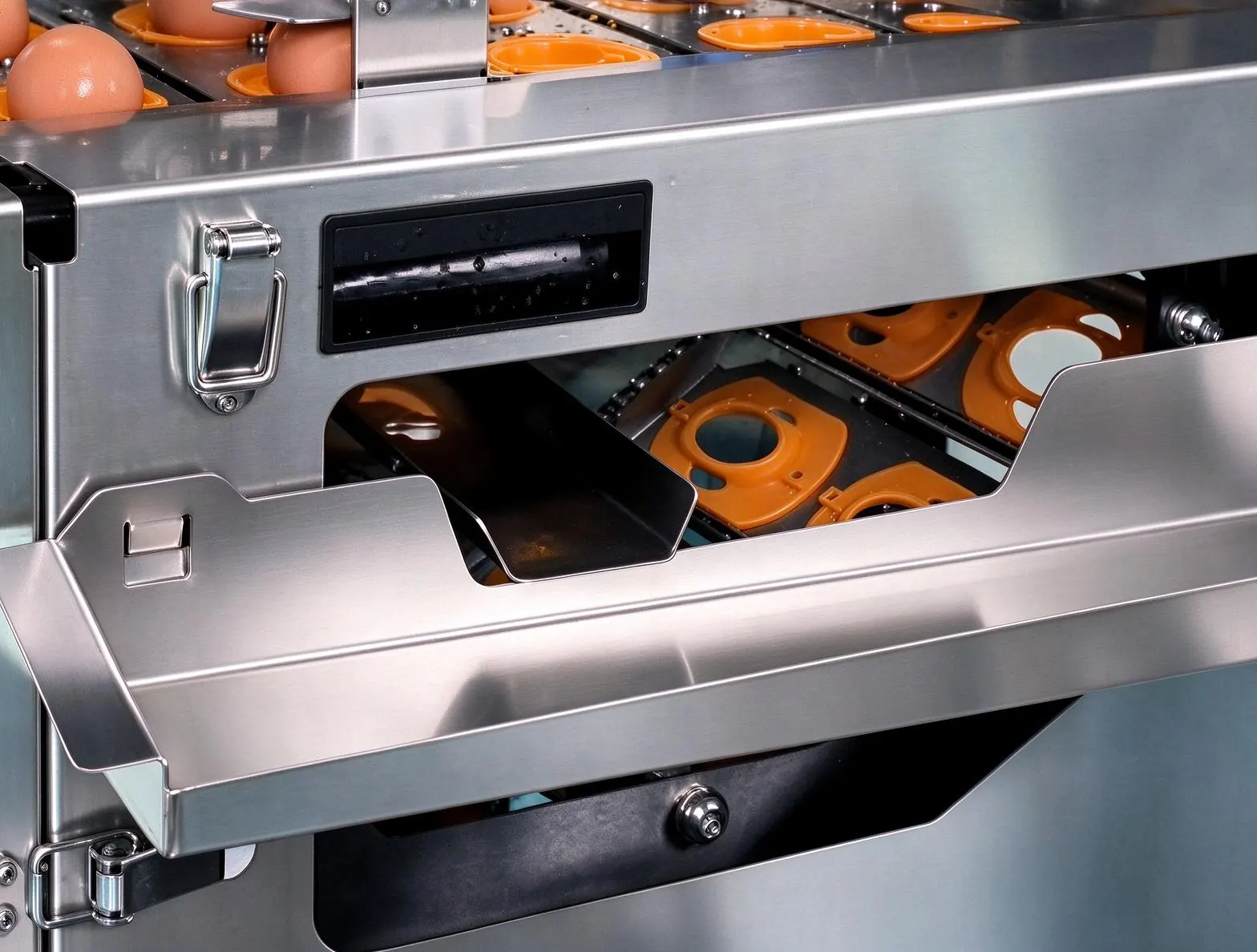
A machine rated at 16,000 eggs per hour is not twice as useful as one rated at 11,000 if your supply only delivers 60,000 eggs a day. Match the machine to the supply and the shift pattern.
Our machines separate white and yolk into different channels and can combine them at the outlet for whole egg, so one machine covers both. What matters is which products you can actually sell locally.
Breaking machines are adjusted for a size range. If your supply mixes sizes widely, expect lower yield and more shell fragments unless the eggs are graded first.
Older eggs have weaker yolk membranes, which break during separation and contaminate the white. If your supply is not consistently fresh, tell us — it affects separation settings and realistic yield.
A breaker feeding a pasteuriser directly needs a buffer tank and flow control between them, because the breaker delivers in surges and the pasteuriser needs constant flow.
Send your daily volume and your site conditions. We will recommend a model and explain the reasoning — including a smaller machine than you asked for, if that is what makes sense.
Yield is the proportion of the egg's liquid content that reaches your tank rather than leaving with the shell. Small differences matter: on a line processing 100,000 eggs a day, one percent of yield is a measurable amount of product every week.
Yield is affected by blade condition and adjustment, cup design, conveyor speed, and how consistent the egg size is. It is not a fixed property of a machine model — the same machine gives different yields depending on how it is set up and maintained.
Fragments come from cracking too hard, from blades that have worn, and from eggs with weak shells. They are removed downstream by filtering, but filtering is a second line of defence, not the first — a machine that shatters shells produces fine particles that pass through filters.
Ask any supplier what filter they fit as standard and whether it can be changed.
This is the failure mode with the highest cost. One spoiled egg, if its contents join the main flow, can affect an entire buffer tank — which then has to be discarded rather than pasteurised, because pasteurisation does not reverse spoilage.
The defence is the inspection position: each egg's contents are visible and rejectable before they merge with the rest. Machines differ in how easy that inspection is to perform at full speed, which is worth checking on a video of the machine running rather than on a specification sheet.
CIP is the equipment most often bought too small. How to size tank volume, flow and the number of tanks from your circuits and cleaning window.
Work back from your egg supply, not forward from a machine rating. How to size a first liquid egg line and which stages buyers most often forget.