Manufacturer · Qingdao, China · EXW / FOB Qingdao
Milk Pasteurization Equipment

Plate UHT Sterilizer

A continuous plate heat treatment system for milk and similar liquid dairy products.
Capacity
1,000 – 10,000 L/h
Models
6 sizes
Heating
Steam, 0.2 kg/L
Contact material
SUS304, Ra 0.6 μm
Control
Siemens as standard
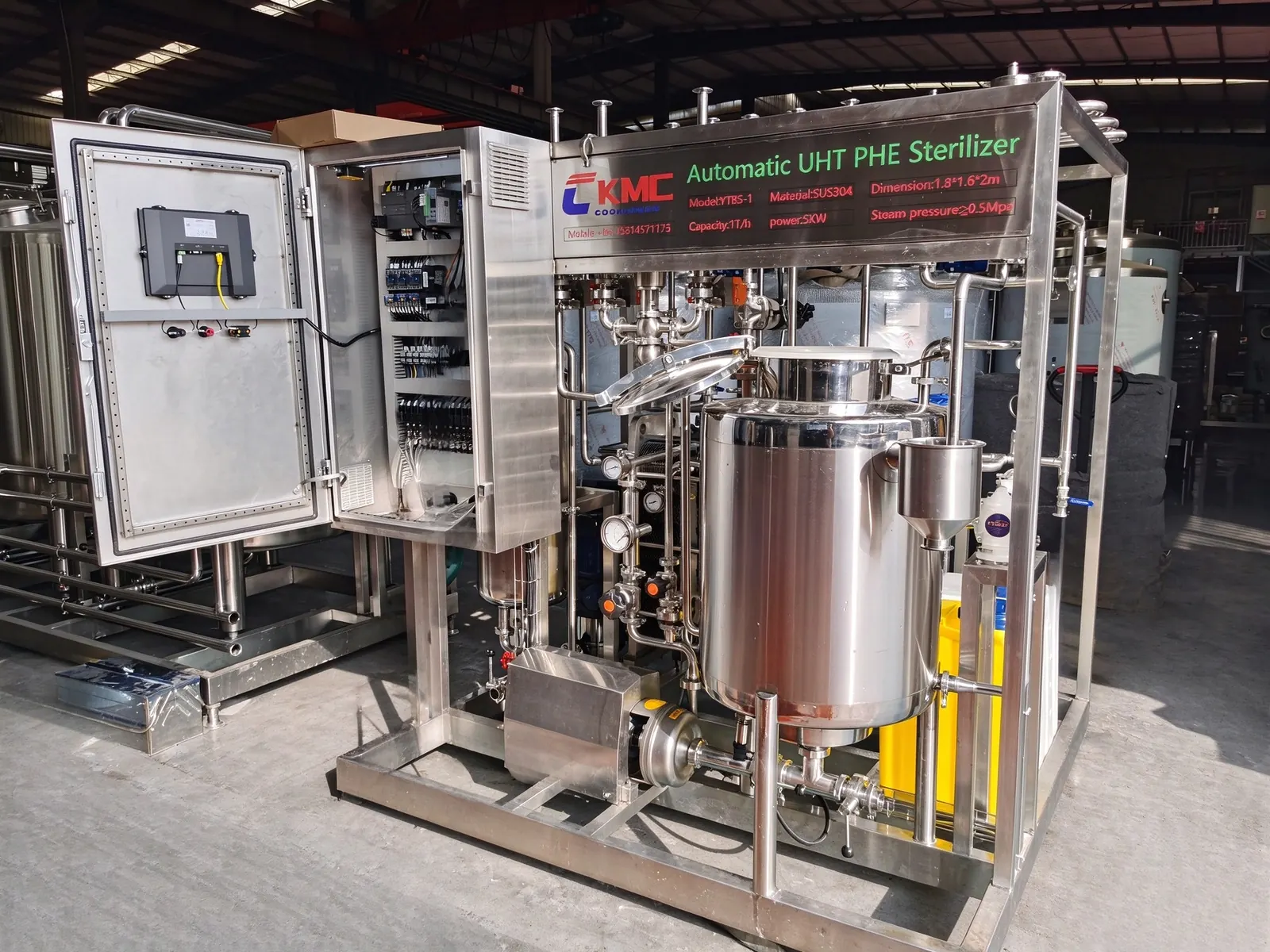
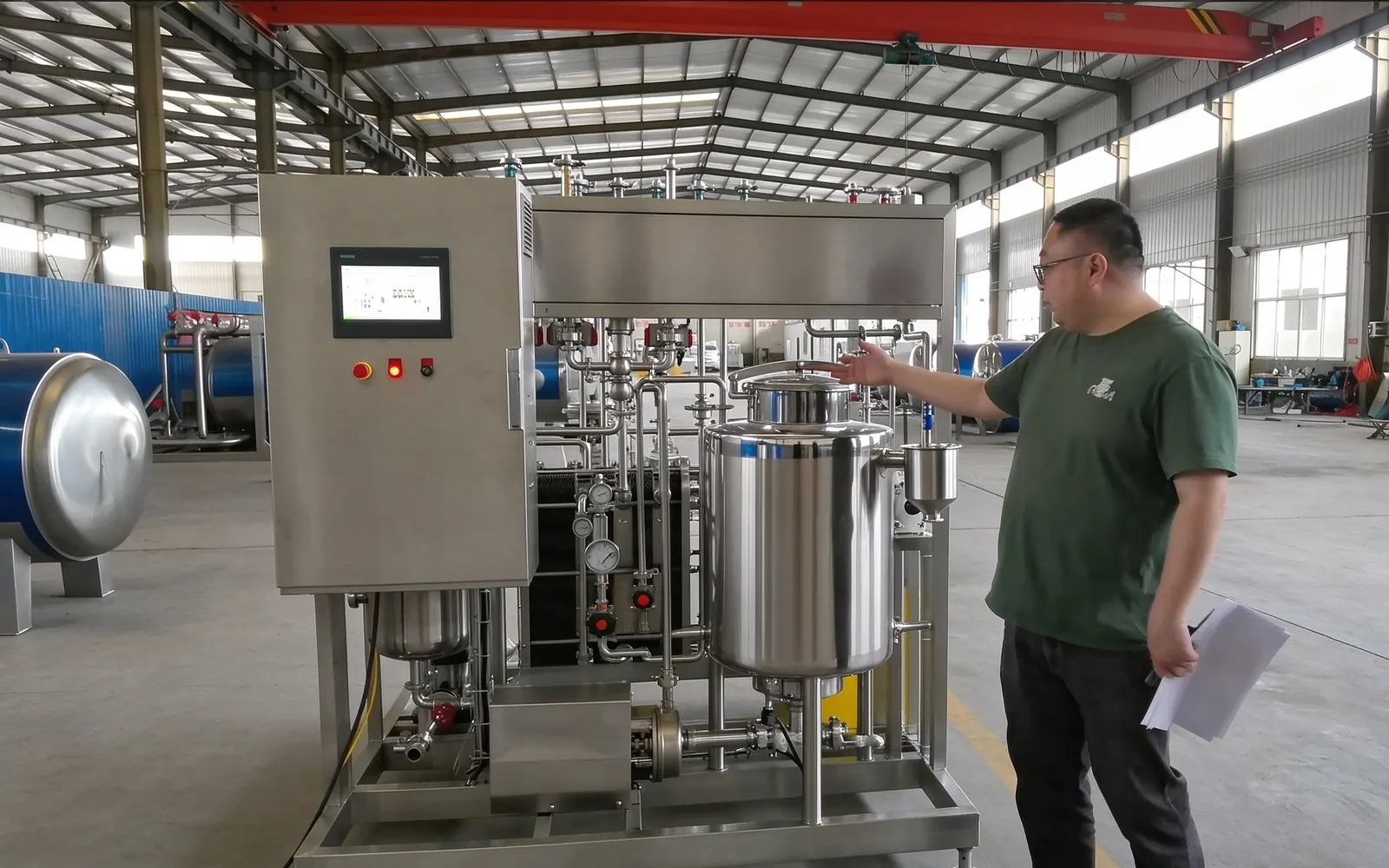
1,000 – 10,000 L/h Plate UHT sterilizer during factory test run
Real photos · our workshop

Plate UHT Sterilizer: photos

Overview

A continuous plate heat treatment system for milk and similar liquid dairy products. Product flows through a plate heat exchanger where incoming cold milk is warmed by outgoing hot milk, then through the heating and holding sections, and back through regeneration on the way out.

Regeneration is what makes a continuous system cheaper to run than a batch vat at steady volume: much of the heat put into the product is recovered from it again on the way out, so both the heating and the cooling load fall.

Six models cover 1,000 to 10,000 litres per hour. Steam consumption scales with capacity and is listed per model in the table below — the figure to check against your boiler before ordering rather than after.

Designed for

  • Raw whole and skimmed milk
  • Reconstituted milk from powder
  • Yogurt base before fermentation
  • Flavoured milk without particulates

Not designed for

  • Products with particulates, which block plate gaps — a tubular system should be specified instead
  • High-viscosity products beyond what a plate gap will pass

Who this equipment is for

  • Dairy plants producing milk for ambient or extended-shelf-life distribution
  • Yogurt producers heat treating base before fermentation
  • Plants replacing batch heat treatment because daily volume has outgrown it
  • Contractors and integrators building a dairy plant for an end client

Less suitable for: Very small volumes, and operations changing product several times per shift where changeover and cleaning would exceed production time.

How it works

  1. Milk enters a balance tank, which keeps a constant head of product at the feed pump.
  2. The feed pump moves milk at a fixed rate through the regeneration section, where incoming cold milk is warmed by outgoing hot milk.
  3. In the heating section, steam-heated water raises the milk to process temperature.
  4. The milk passes through the holding section, sized so that even the fastest-moving portion is held for the required time.
  5. A temperature sensor at the end of the holding section controls flow diversion, returning under-temperature product rather than letting it pass forward.
  6. Correctly processed milk gives up its heat back through regeneration, then passes through the cooling section on the way to storage or filling.

Machine structure

  • Balance tank with level control
  • Feed pump
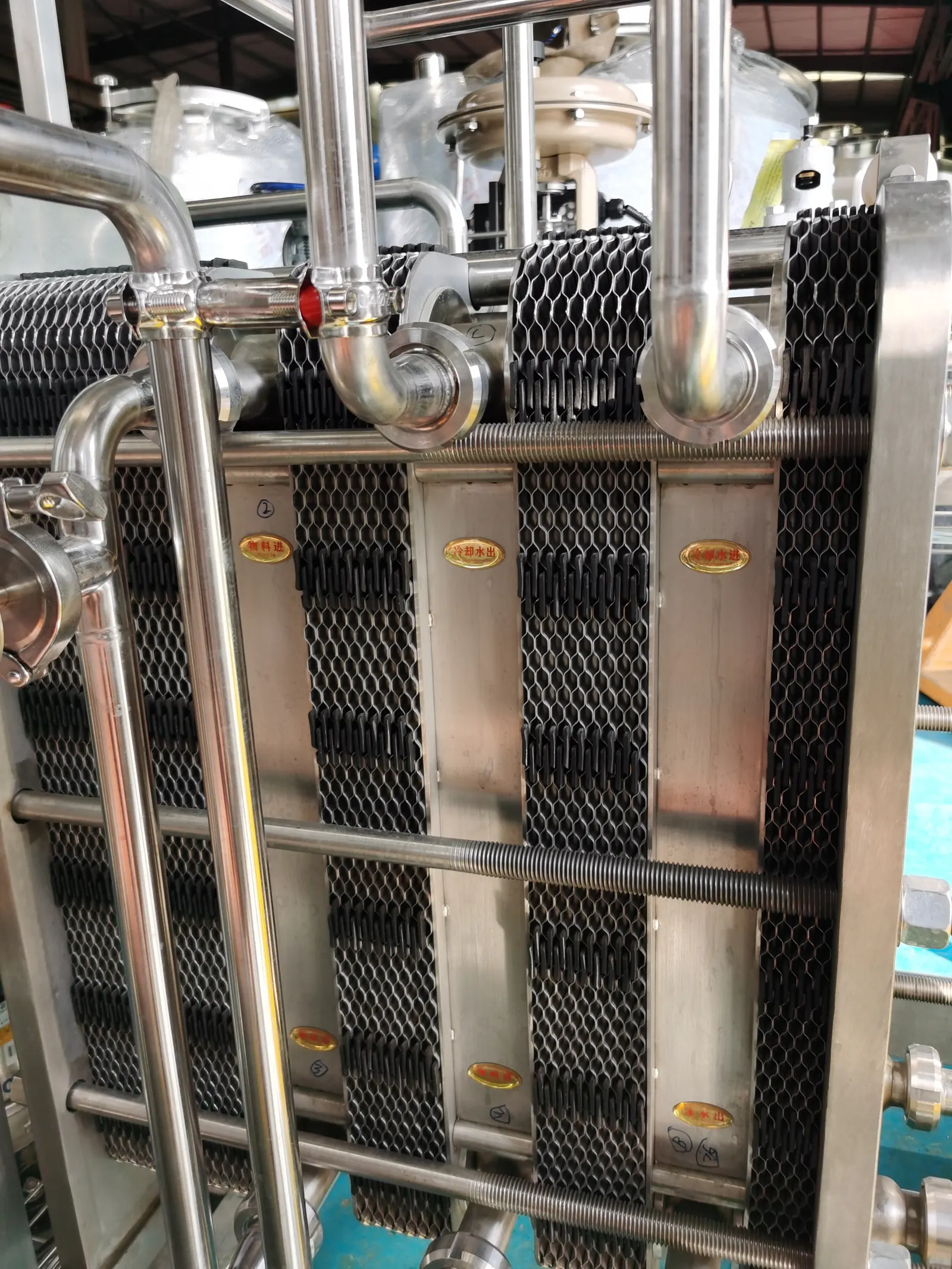
  • Plate heat exchanger with regeneration, heating and cooling sections
  • Holding section sized to flow rate and hold time
  • Hot water set
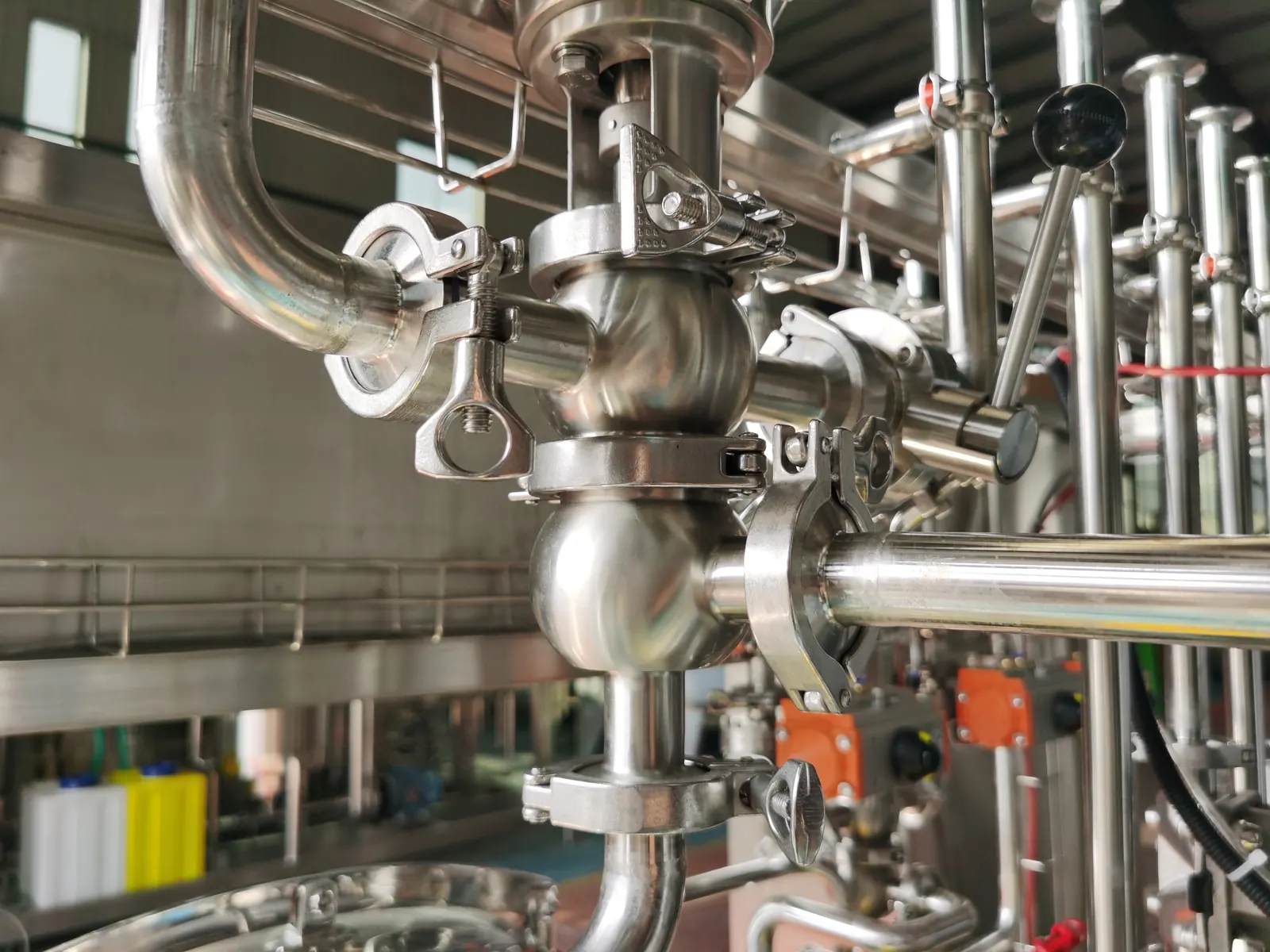
  • Flow diversion valve with return line
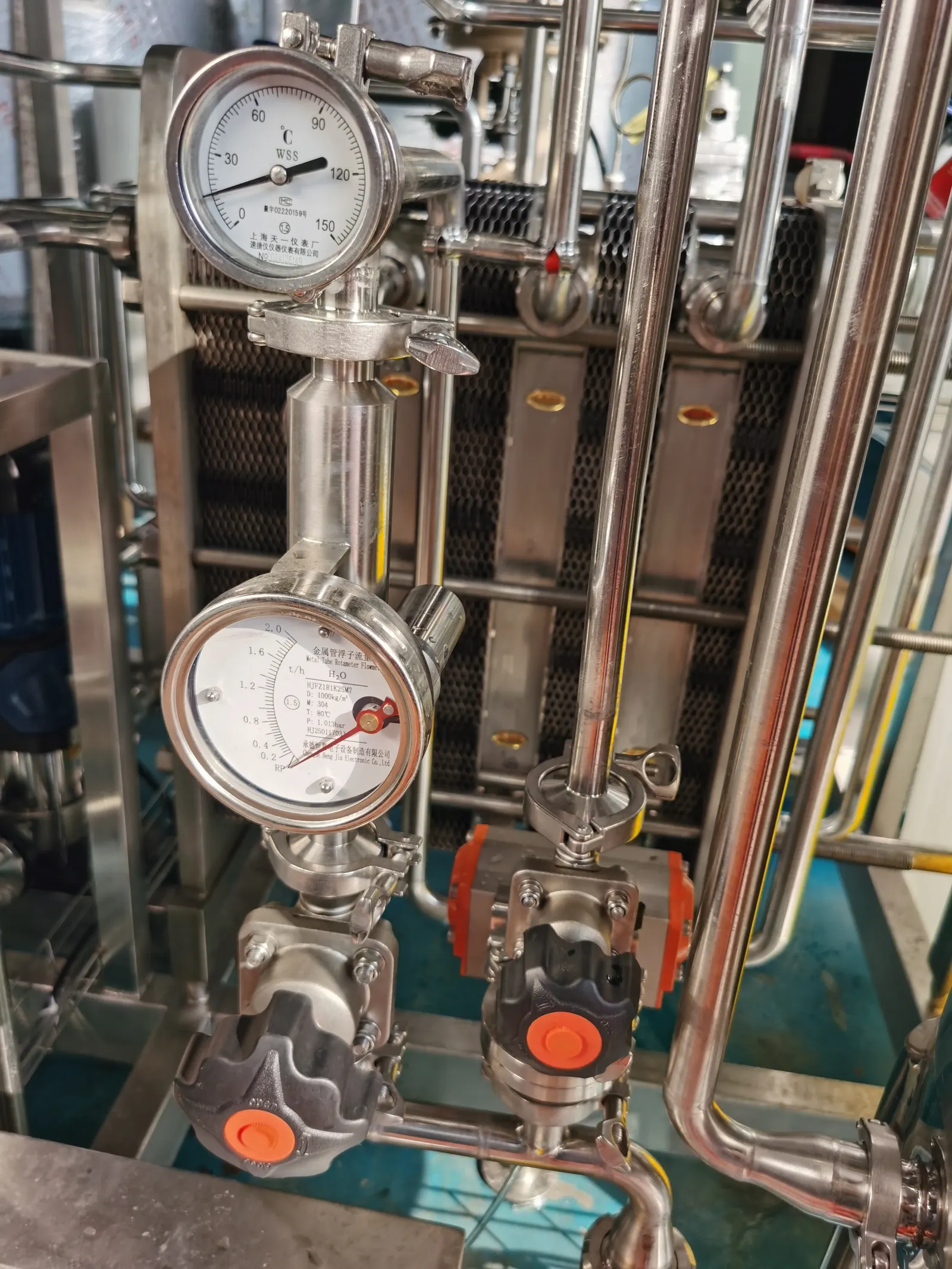
  • Temperature sensors at holding section inlet and outlet
  • Control panel with Siemens components as standard
  • CIP inlet and return connections

Technical specifications

ModelCapacitySteam consumptionInstalled powerDimensions (L×W×H)Weight
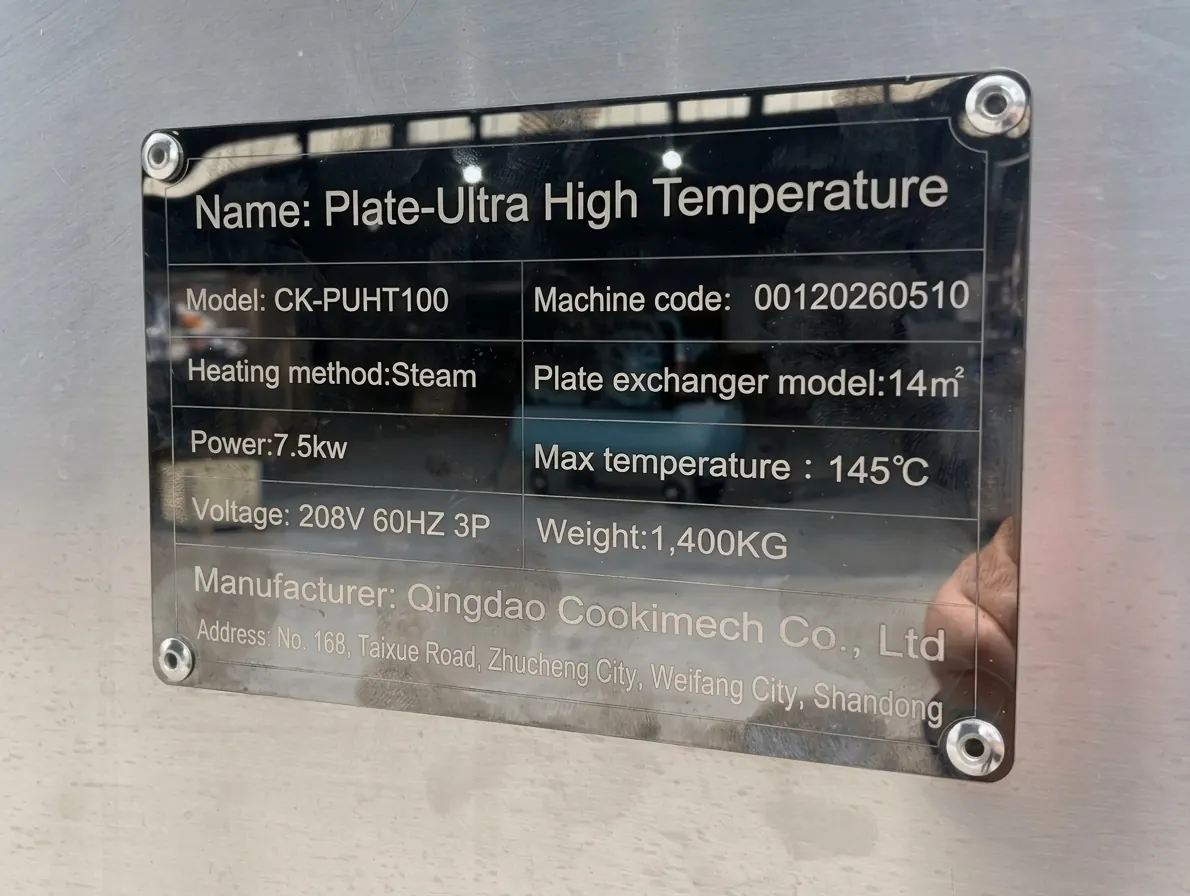
UHT-10001,000 L/h220 kg/h7 kW1800 × 950 × 2000 mm1,400 kg
UHT-20002,000 L/h400 kg/h9 kW1900 × 1050 × 2100 mm1,700 kg
UHT-30003,000 L/h600 kg/h7 kW1950 × 1100 × 2100 mm2,000 kg
UHT-50005,000 L/h1,000 kg/h7 kW2300 × 1300 × 2200 mm2,500 kg
UHT-80008,000 L/h1,600 kg/h7 kWOn requestOn request
UHT-1000010,000 L/h2,000 kg/h7 kWOn requestOn request

Steam consumption is proportional to capacity at 0.2 kg of steam per litre across the range. All contact parts SUS304.

Material and surface finish

Product contact surfaces
SUS304 stainless steel
Frame
SUS201 stainless steel
Internal surface finish
Ra 0.6 μm
Welding
Argon shielded
Gaskets and seals
Food-grade rubber
Material documentation
Material certificate supplied with every order

Power supply and heating

Heating is by steam. Steam consumption per model is listed in the specification table — check it against your boiler capacity before ordering, since retro-fitting boiler capacity is far more disruptive than sizing it correctly at the start.

Voltage and frequency are specified per order. Motors and control components are selected accordingly.

Voltage options: 380 V / 50 Hz · 220 V / 60 Hz · 415 V / 50 Hz · 440 V / 60 Hz · Other supplies on request

Automation and control

Control components are Siemens as standard. If your maintenance team and your local supplier already work with a different platform, we build to the brand you specify instead — Schneider, Mitsubishi and others can be quoted.

This matters more than it looks. A control fault on a line running perishable product has to be resolved the same shift, and that is far easier with a part your local distributor holds than with one shipped from China. Tell us your preference at the enquiry stage and we will quote accordingly.

Optional configurations

OptionWhen it makes sense
Automatic temperature recordingRequired in some markets and requested in most commercial audits
Additional cooling sectionWhere chilled water is limited or the final temperature must be lower
Integrated CIP skidWhere no central CIP system exists
Specified control brand (Schneider, Mitsubishi or other)Where your maintenance team and local suppliers already work with one platform

Not sure which model fits your throughput?

Send your daily volume and your site conditions. We will recommend a model and explain the reasoning — including a smaller machine than you asked for, if that is what makes sense.

Why buyers choose it

  • Heat recovery through the regeneration section reduces energy per litre compared with batch heat treatment.
  • Every litre receives the same thermal treatment rather than every batch — which matters when you have to demonstrate consistency to a customer or a regulator.
  • Automatic flow diversion means under-processed milk cannot reach the filling stage without an operator noticing.
  • Steam consumption is published per model, so the utility load can be checked against your boiler before you order.
  • The circuit is cleaned in place, so there is no daily dismantling.

Delivery, packing and installation

Lead time
Standard models 20 days; custom builds 20 days; complete lines 40–45 days
Packing
Fumigated wooden crates carrying the IPPC mark
Incoterms
EXW or FOB Qingdao
Documents
Commercial invoice, packing list, certificate of origin, material certificate, English operation manual and drawings
Installation
Our engineers travel to site. Typical on-site installation and commissioning is 4 days. Travel and accommodation are covered by the buyer.
Training
Delivered on site during commissioning: operation, routine maintenance, and a working session on your process flow.
Warranty
2 years on structural parts (tanks, frames, pipework and fabricated assemblies). 1 year on electrical and electronic components (motors, controls, sensors, PLC and HMI). Excludes misuse, incorrect installation, operation outside specified conditions, lack of maintenance and normal wear parts.

Information we need to quote

  1. What product, and at what fat content?
  2. Litres per hour, and hours per day?
  3. What heat treatment temperature and hold time does your local regulation require?
  4. What is your boiler capacity in kg of steam per hour?
  5. Local voltage and frequency?
  6. Chilled water availability and temperature?
  7. Where does the treated product go next — filling, a tank, or fermentation?
Request a custom quote →

Questions buyers ask

How do I check whether my boiler is big enough?
Compare its output in kilograms of steam per hour against the steam consumption listed for the model you are considering — 220 kg/h for the 1,000 L/h system up to 2,000 kg/h for the 10,000 L/h system. If your boiler also serves CIP or other equipment, add those loads. Undersized steam shows up as temperature fluctuation and repeated flow diversion, not as an obvious failure.
Plate or tubular — which should I choose?
Plate exchangers give more heat transfer area in less space and cost less for the same duty, which suits clean, low-viscosity milk. Tubular exchangers handle viscous products and products with particulates without blocking and run longer between cleans, but take more space and cost more. If your product range may expand into thicker products later, that is worth deciding now.
What is a holding section and why does its length matter?
It is the section where product stays at temperature for the required time. Its length is calculated from your flow rate: at a higher flow rate product passes through faster, so the section must be longer to give the same hold time. This is why a system cannot simply be run above its rated capacity — the temperature would still be reached, but the hold time would be too short.
Can it be built for 60 Hz supply?
Yes. Voltage and frequency are specified per order, and motors, control components and heating elements are selected accordingly. Confirm your local supply when you enquire — converting after delivery means changing parts.

Used in these lines

Engineering guides

Start with your numbers

Tell us what you produce. We will size the line.

Product, daily volume, voltage and heating source are enough to start. An engineer replies with a process flow, equipment list and quotation.