Pasteurization vs UHT: How to Choose Milk Heat Treatment for Your Market
The choice between pasteurized and UHT milk is decided by your distribution chain, not your budget. A practical guide for new dairy plants.
UHT is chosen for one reason: the product has to survive without refrigeration. If you sell into regions where the cold chain cannot be relied on, pasteurised milk will not work no matter how well it is made.
UHT heat treatment only delivers ambient shelf life when it is followed by aseptic handling and aseptic filling. We build the heat treatment, tanks and CIP, and integrate the aseptic filler you choose.
Manufactured by us Specified & integrated
Insulated tanks with agitation and cooling.
Milk Cooling & Storage TanksMixing tanks for fat standardising, powder and flavour make-up.
Dairy Mixing TanksSpecified and integrated; stated as bought-in.
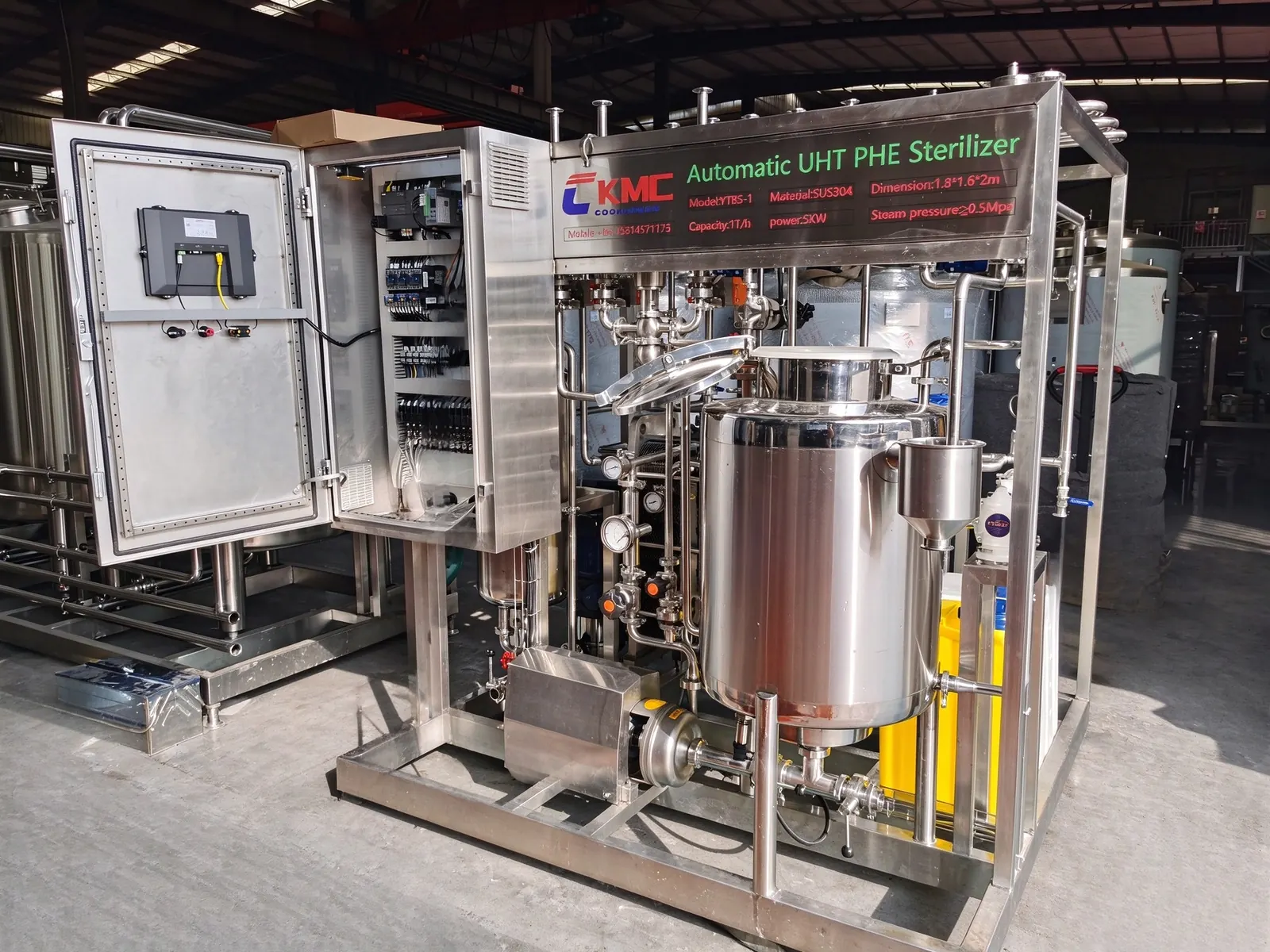
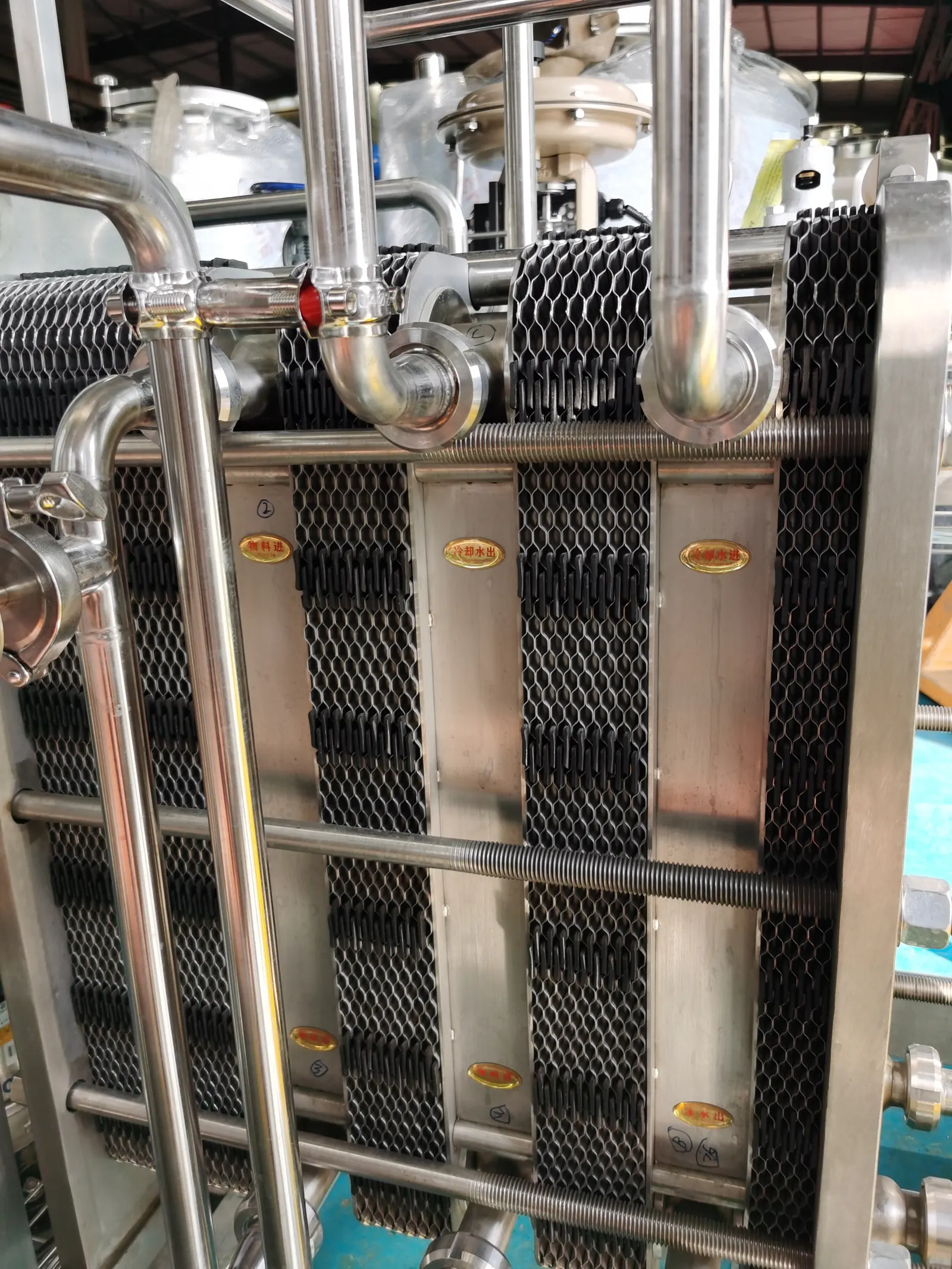
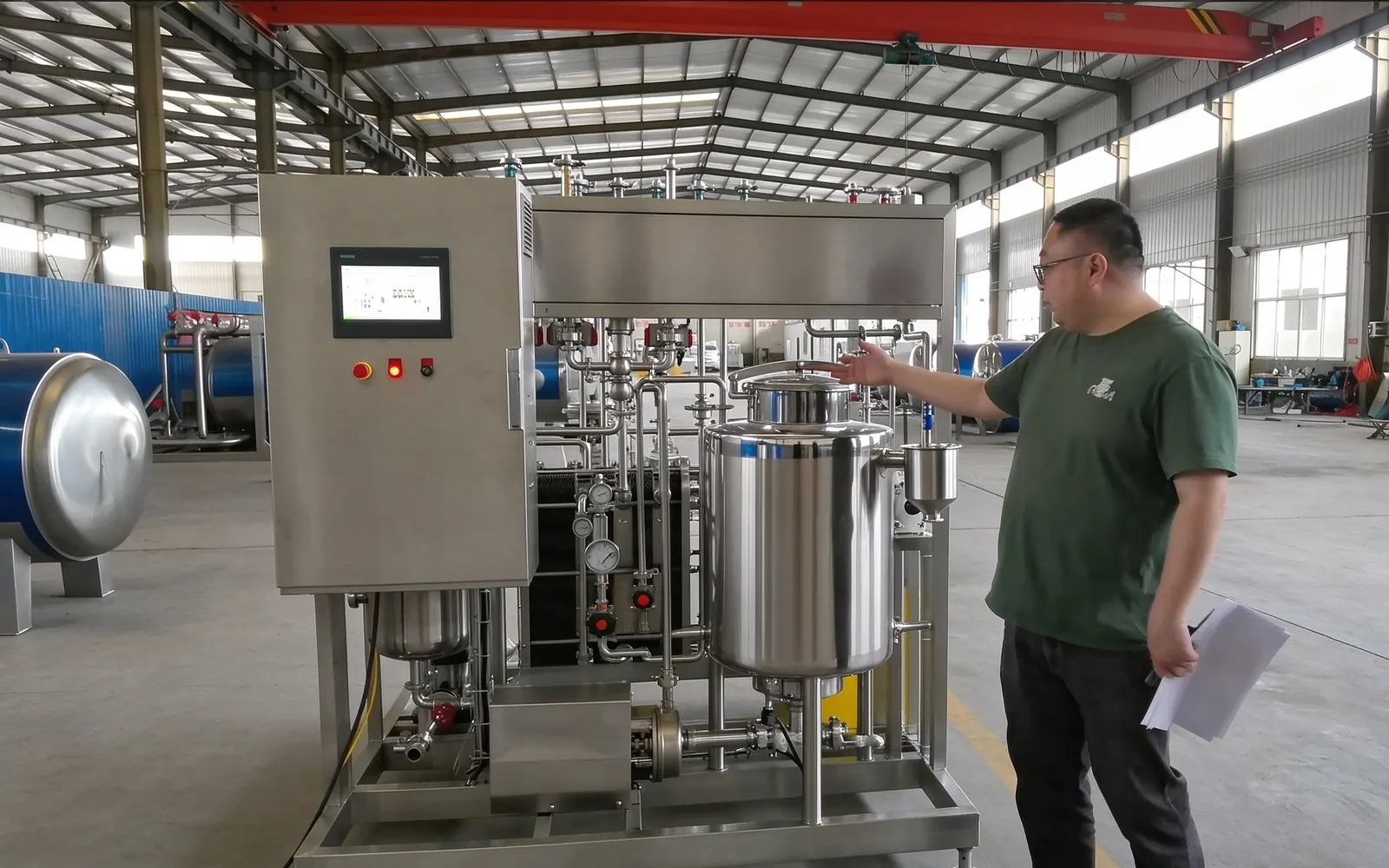
Plate UHT sterilizer, six models from 1,000 to 10,000 L/h, steam use published per model.
Milk Pasteurization EquipmentAseptic filler of your chosen format, integrated with the heat treatment.
Sized to the circuits and cleaning window.
CIP Cleaning SystemsRaw material, target product, capacity, local voltage and frequency, heating source and destination port. If you are not sure about some of these, tell us what you do know.
A process flow, an equipment list with specifications, a suggested layout and a quotation. If more than one configuration makes sense, we explain the trade-off instead of sending one option.
Fabrication, welding, polishing and assembly in our own workshop. Standard machines ship in 20 days; a complete line in 40–45 days.
Our engineers travel to site — typically 4 days for installation, commissioning and operator training. Travel and accommodation are covered by the buyer.
The choice between pasteurized and UHT milk is decided by your distribution chain, not your budget. A practical guide for new dairy plants.
About three minutes. An engineer reads every request and replies with questions or a process proposal — not an automatic price list.