Egg Washing Lines
Egg Washing Line
This line washes, dries and candles shell eggs before they go to grading, packing or breaking.
- Capacity
- 10,000 – 15,000 eggs/h (2-row)
- Models
- 1-row, 2-row, 3-row
- Sections
- Load · Wash · Dry · Candle · Collect
- Contact material
- SUS304
10,000 – 15,000 eggs/h (2-row) 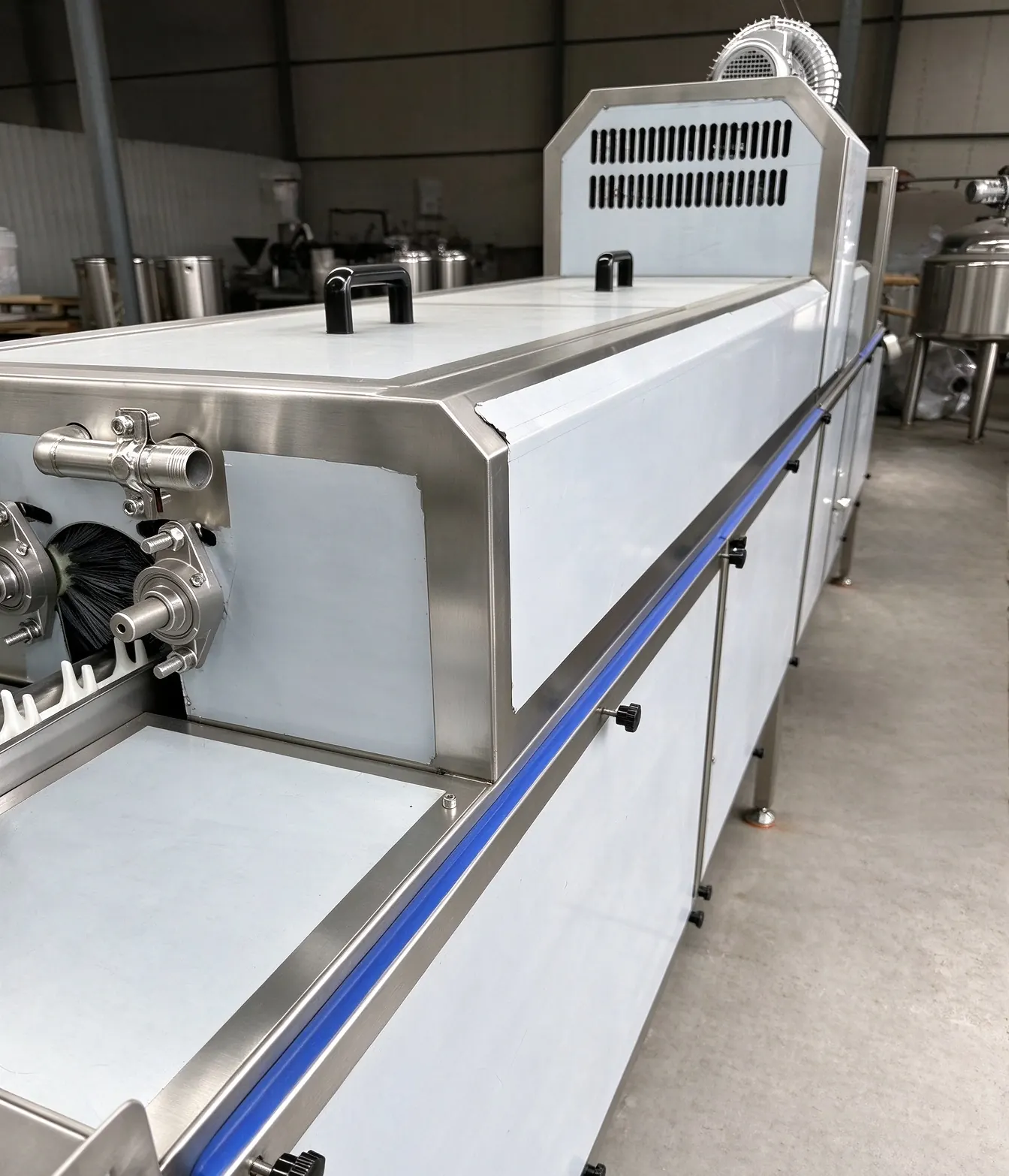
Real photos · our workshop
Egg Washing Line: photos
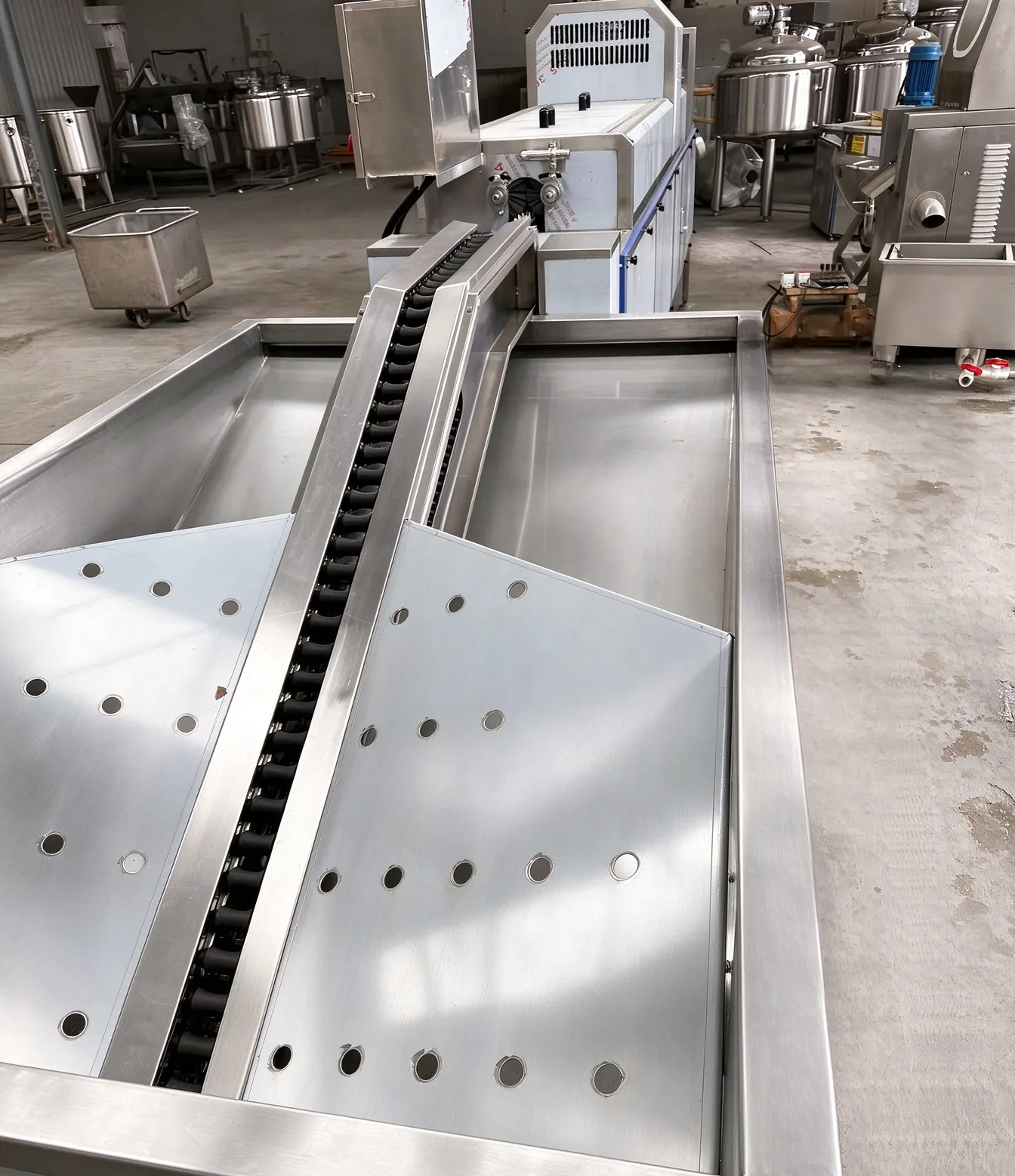
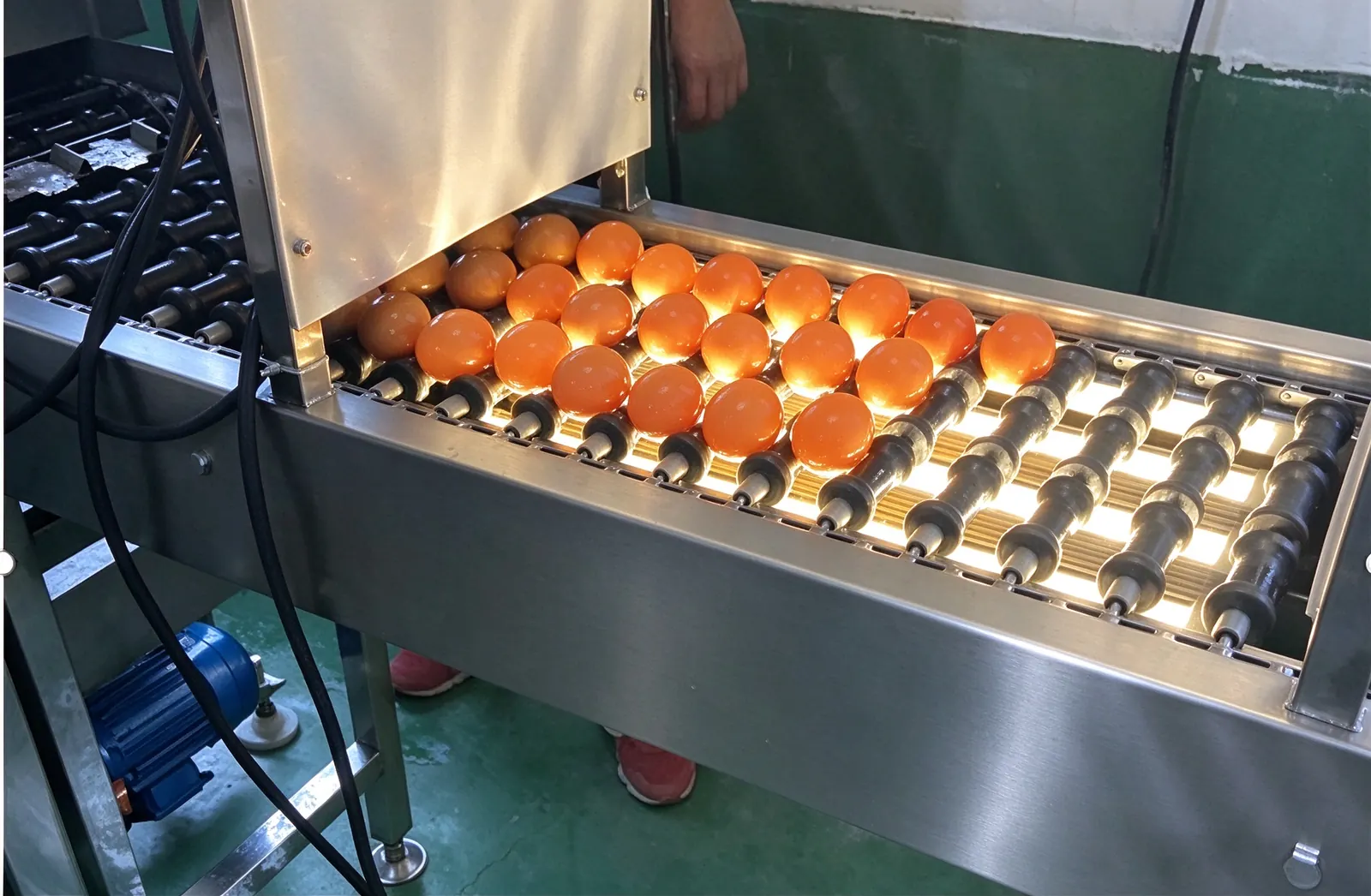
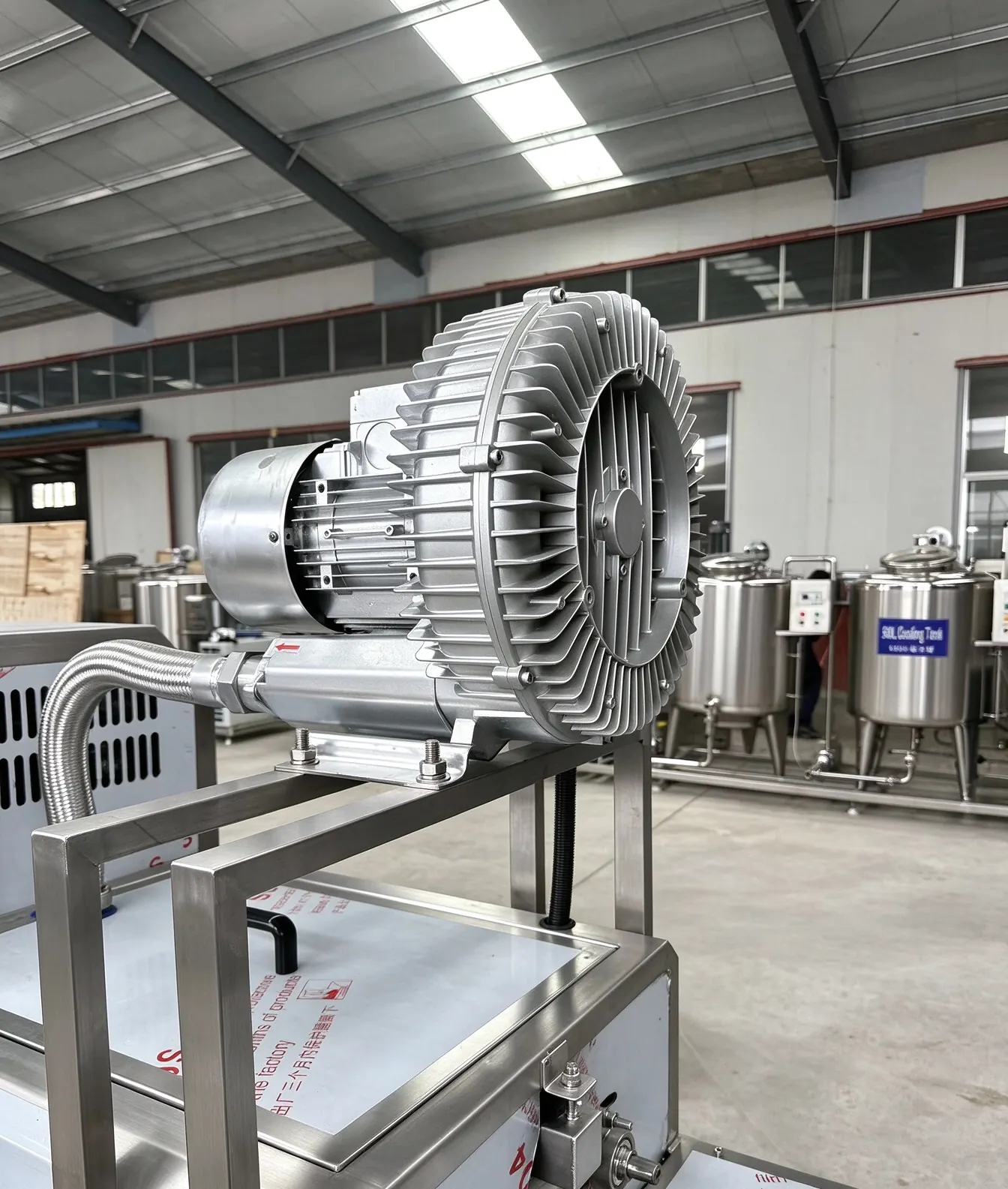
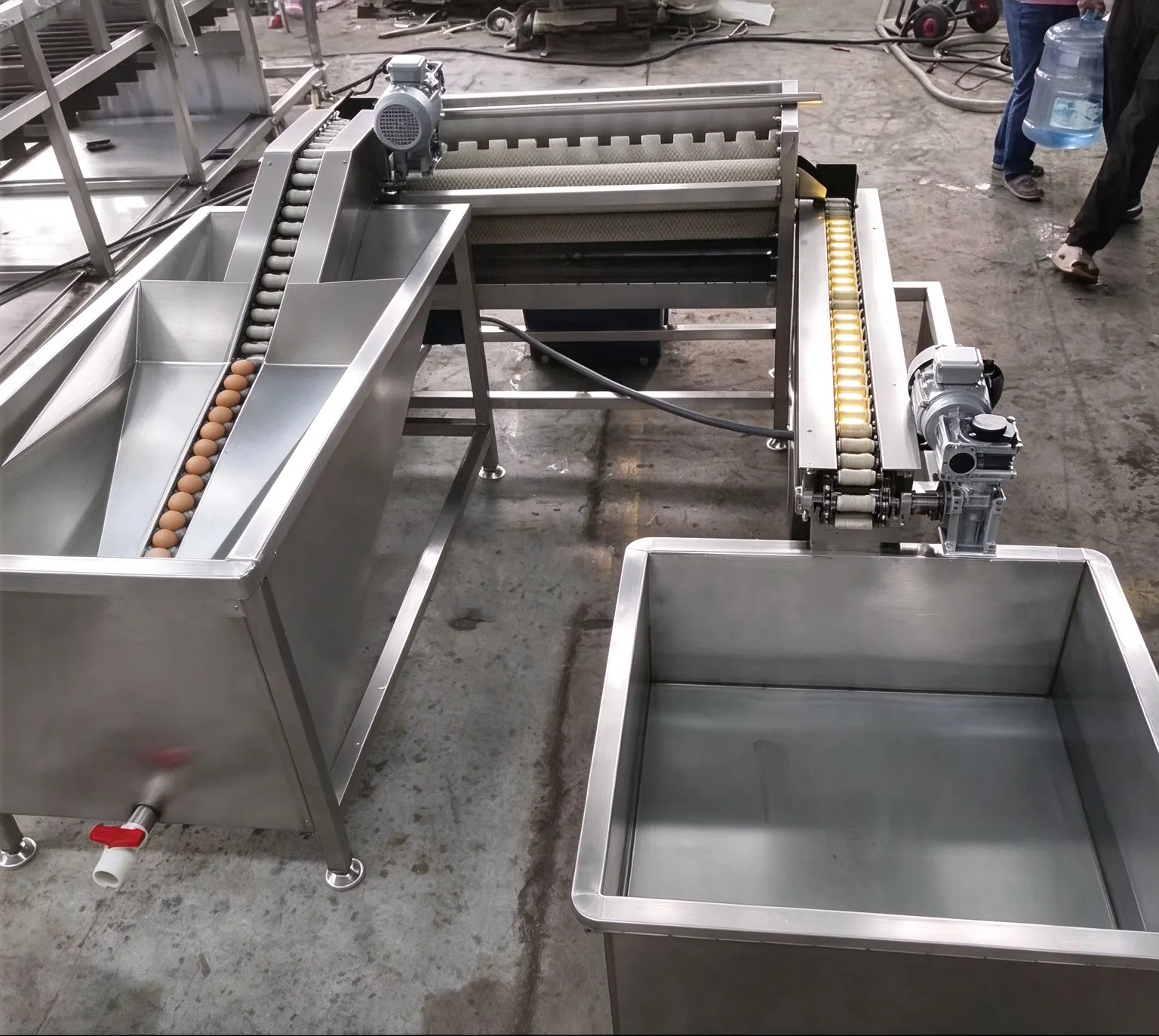
Overview
This line washes, dries and candles shell eggs before they go to grading, packing or breaking. It is built in sections — a loading water tank, a washing, air drying and candling section, and a collection platform — which are laid out to suit the space available.
The drying section is the part buyers most often underestimate. Washing an egg without drying it properly is worse than not washing it: a wet shell carries surface contamination through the crack when the egg is broken. Any washing line feeding a breaking machine has to dry as thoroughly as it washes.
The candling position lets an operator remove cracked and defective eggs before they reach grading or breaking, where a single bad egg costs far more than the time taken to spot it.
Designed for
- Shell chicken eggs from farm or collection
Not designed for
- Already-broken or heavily cracked eggs
Who this equipment is for
- Egg farms preparing eggs for retail packing
- Liquid egg processors washing before breaking
- Packing stations receiving eggs from multiple farms
Less suitable for: Operations receiving eggs already washed and dried to a documented standard.
How it works
- Eggs are loaded into the water tank at the head of the line.
- The washing section cleans the shell with brushes and water.
- The air drying section removes surface moisture — the step that determines whether the line is safe to feed a breaking machine.
- At the candling position an operator inspects each egg against light and removes cracked or defective ones.
- Clean, dry eggs collect on the platform at the end of the line for packing, grading or breaking.
Machine structure
- Loading water tank
- Washing section with brushes
- Air drying section
- Candling position
- Collection platform
- SUS201 frame, SUS304 contact surfaces
- Control panel with Siemens components as standard
Technical specifications
| Model | Capacity | Installed power | Loading tank | Wash / dry / candle section | Collection platform |
|---|---|---|---|---|---|
| 1-row | On request | On request | 2600 × 1150 × 1100 mm | 4400 × 650 × 1600 mm | 2000 × 650 × 900 mm |
| 2-row | 10,000 – 15,000 eggs/h | 7.8 kW | 2600 × 1600 × 1100 mm | 4400 × 1000 × 1600 mm | 2000 × 800 × 1150 mm |
| 3-row | On request | 11.55 kW | 3000 × 2100 × 1100 mm | 4300 × 1500 × 1700 mm | 2000 × 950 × 1100 mm |
The line ships as three sections, so overall length depends on how you lay them out. Contact materials: SUS304 + silicone + food-grade plastic.
Material and surface finish
- Product contact surfaces
- SUS304 stainless steel
- Frame
- SUS201 stainless steel
- Internal surface finish
- Ra 0.6 μm
- Welding
- Argon shielded
- Gaskets and seals
- Food-grade rubber
- Material documentation
- Material certificate supplied with every order
Power supply and heating
Installed power is higher than on the breaking and grading machines because of the drying section: 7.8 kW on the 2-row line and 11.55 kW on the 3-row.
Voltage and frequency are specified per order.
Voltage options: 380 V / 50 Hz · 220 V / 60 Hz · 415 V / 50 Hz · 440 V / 60 Hz · Other supplies on request
Automation and control
Control components are Siemens as standard. If your maintenance team and your local supplier already work with a different platform, we build to the brand you specify instead — Schneider, Mitsubishi and others can be quoted.
This matters more than it looks. A control fault on a line running perishable product has to be resolved the same shift, and that is far easier with a part your local distributor holds than with one shipped from China. Tell us your preference at the enquiry stage and we will quote accordingly.
Optional configurations
| Option | When it makes sense |
|---|---|
| Integration with a grading machine | Where washing and grading run as one continuous flow |
| Specified control brand (Schneider, Mitsubishi or other) | Where your maintenance team and local suppliers already work with one platform |
Not sure which model fits your throughput?
Send your daily volume and your site conditions. We will recommend a model and explain the reasoning — including a smaller machine than you asked for, if that is what makes sense.
Why buyers choose it
- Washing, drying and candling in one line, so eggs reach the next stage clean, dry and inspected.
- The drying section is sized to the throughput, which is what makes the line safe to put ahead of a breaking machine.
- Sectional construction means the line can be arranged to fit the building rather than the building to the line.
- A candling position removes cracked eggs before they reach grading or breaking.
Delivery, packing and installation
- Lead time
- Standard models 20 days; custom builds 20 days; complete lines 40–45 days
- Packing
- Fumigated wooden crates carrying the IPPC mark
- Incoterms
- EXW or FOB Qingdao
- Documents
- Commercial invoice, packing list, certificate of origin, material certificate, English operation manual and drawings
- Installation
- Our engineers travel to site. Typical on-site installation and commissioning is 4 days. Travel and accommodation are covered by the buyer.
- Training
- Delivered on site during commissioning: operation, routine maintenance, and a working session on your process flow.
- Warranty
- 2 years on structural parts (tanks, frames, pipework and fabricated assemblies). 1 year on electrical and electronic components (motors, controls, sensors, PLC and HMI). Excludes misuse, incorrect installation, operation outside specified conditions, lack of maintenance and normal wear parts.
Information we need to quote
- How many eggs per hour, and how many hours per day?
- Does the line feed packing, grading or a breaking machine?
- What space is available, and are there height or doorway limits?
- What is your water supply and drainage arrangement?
- Local voltage and frequency?
Questions buyers ask
Does the line grade eggs by size?
No. Washing and grading are separate functions. The washing line cleans, dries and candles; a grading machine sorts by weight. They are commonly installed together and can run as one flow.
What does the candling position do?
It lets an operator inspect each egg against light and remove cracked or defective ones before they reach grading or breaking. On a breaking line this is the second line of defence after the breaker inspection position, and it is much cheaper to reject an egg here than to lose a buffer tank later.
How much space does the line need?
The line ships as three sections — loading tank, wash/dry/candle, and collection platform — with individual dimensions in the table above. Total footprint depends on whether you run them in a straight line or turn a corner. Send us your floor plan and we will propose a layout.
Related equipment
Chain-Type Egg Breaking Machine
Used in these lines
Engineering guides
How to Size a CIP System for a Dairy or Liquid Egg Plant
CIP is the equipment most often bought too small. How to size tank volume, flow and the number of tanks from your circuits and cleaning window.
Starting a Liquid Egg Plant: Capacity, Yield and the First Equipment List
Work back from your egg supply, not forward from a machine rating. How to size a first liquid egg line and which stages buyers most often forget.