Yogurt Fermentation Tanks
Fermentation is the stage where temperature control does most of the work. Culture activity is sensitive to a degree or two, and a tank that cannot hold temperature evenly across its volume gives you inconsistent batches for reasons that are hard to trace.
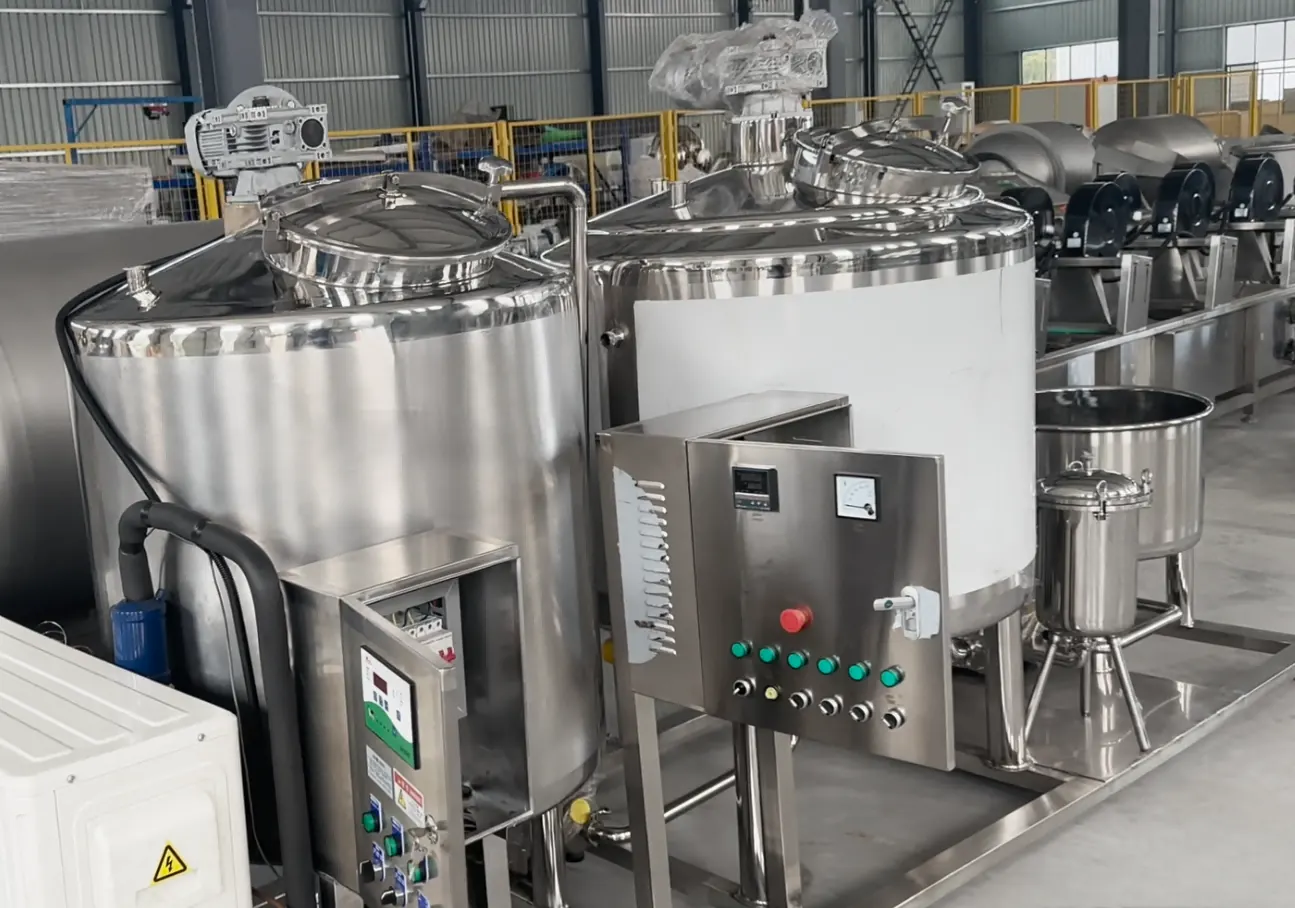
What decides the result
Tanks are insulated and temperature controlled, and sized to the batch volume and cycle time you actually run rather than to a nominal figure.
Equipment in this category
Standard construction
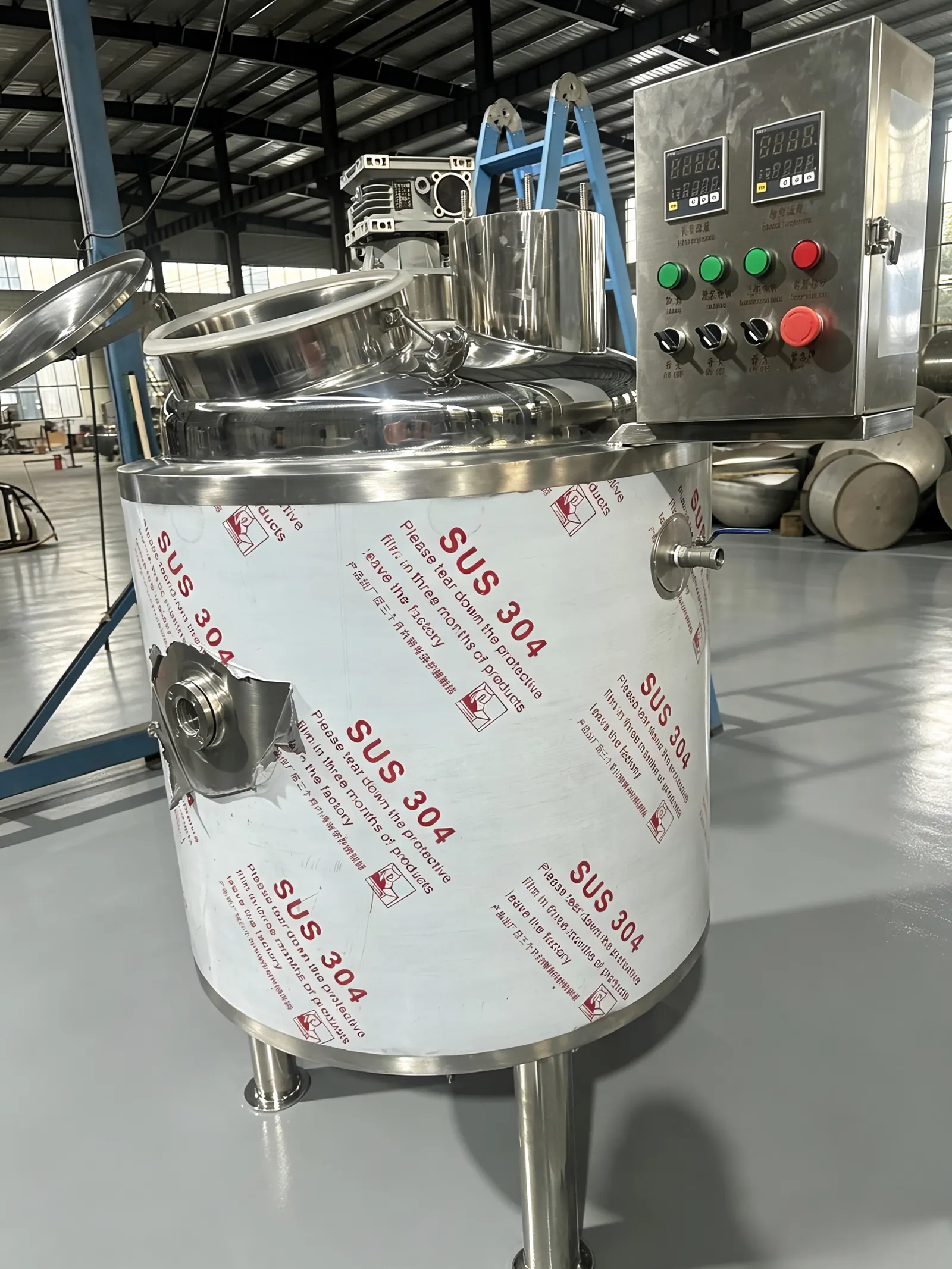
- Insulated, jacketed fermentation tanks with digital temperature control
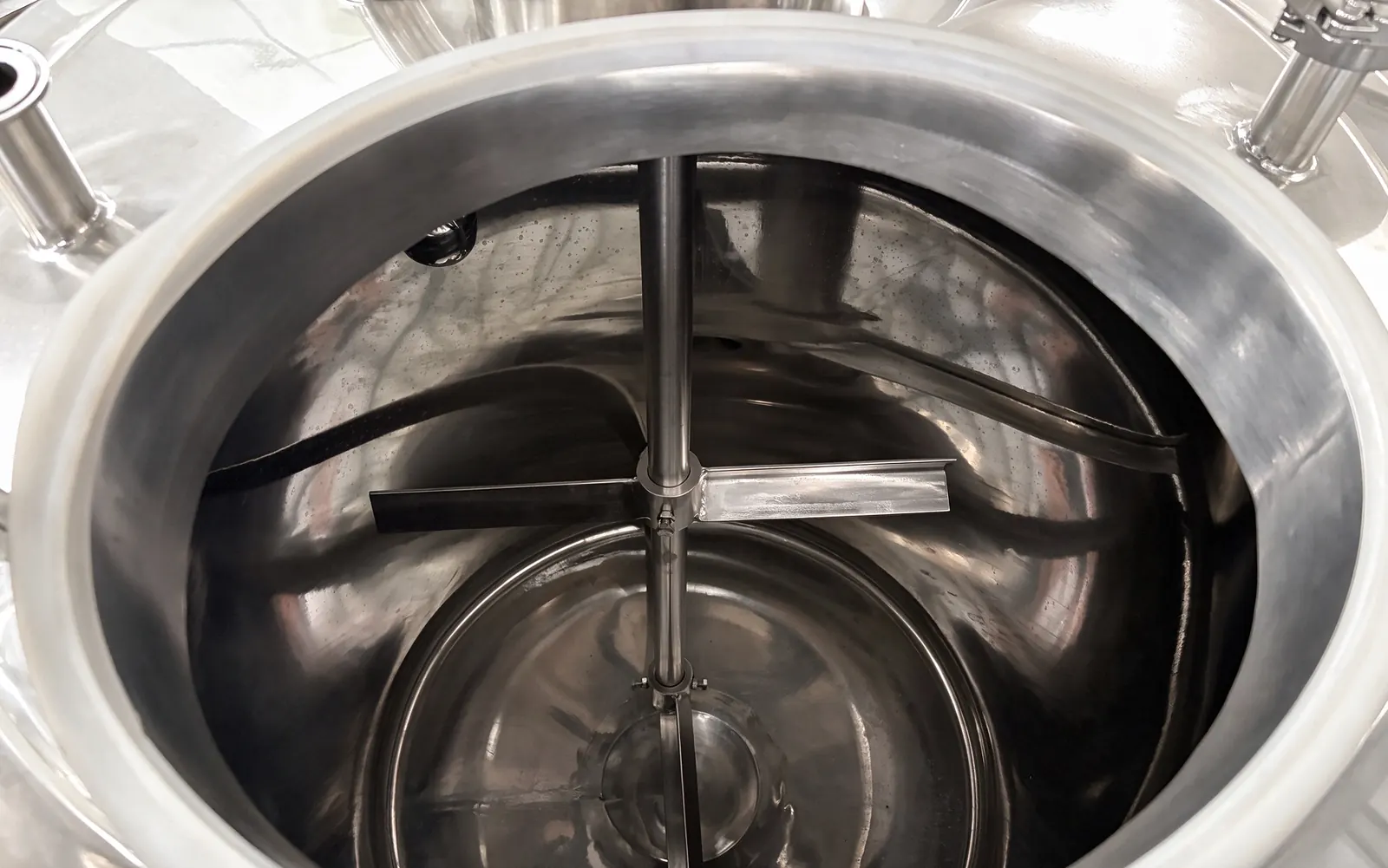
- Slow agitator for gentle breaking and cooling of the curd after fermentation
- Heating and cooling through the jacket: hot water or steam, chilled water or glycol
- Single tanks or several tanks on one skid with a shared control panel
- SUS304 stainless steel on all product contact surfaces, polished to Ra 0.6 μm, argon-shielded welds
Fermentation tanks are built to order with insulation, temperature control and agitation specified for the product. Tell us which yogurt types you produce, your batch volume and your cycle time.
Send my requirements →Yogurt Fermentation Tanks built in our workshop
How to choose
- Pick the yogurt type first
Stirred and drinking yogurt ferment in the tank. Set yogurt ferments in the cup, so it needs filling and an incubation room rather than a large fermenter.
- Size from batch and cycle time
A 4–6 hour fermentation plus cooling means one tank completes one or two batches per shift. More daily volume usually means more tanks, not one bigger tank.
- Plan the cooling capacity
Fermentation stops when the product is cooled. Too little chilled water means over-acid yogurt; we size the jacket to your chilling capacity.
Not sure which model fits your throughput?
Send your daily volume and your site conditions. We will recommend a model and explain the reasoning — including a smaller machine than you asked for, if that is what makes sense.
Where this equipment fits in your line
Upstream
Downstream
Complete lines
Information we need to quote
- Set, stirred or drinking yogurt — or more than one?
- What batch volume, and how many batches per day?
- What fermentation temperature and cycle time do you run?
- What heating and cooling media are available on site?
- Local voltage and frequency?